Last Updated: November 19, 2026
Quick Summary
Seasonal wine pairings match wine styles to the produce, weather and dishes of a particular time of year, so your wedding list moves with the menu rather than defaulting to a generic red and white. Warmer months call for lighter, zesty styles served well chilled, while cooler months reward richer, fuller-bodied wines.
- Match the body of the wine to the weight of the dish when building your shortlist.
- A dry Riesling is the most versatile white for covering a whole entrée course.
- Pour dry sparkling on arrival and keep dry rosé flowing through the entrée in summer.
- A 750 ml bottle pours roughly five to six glasses, so plan by the glass.
- Allow one glass of sparkling on arrival plus two to three glasses of still wine per guest.
Table of Contents
- Why Seasonal Wine Pairings Suit Modern Australian Wedding Menus
- A Wedding Wine Selection Guide for Modern Australian Dishes
- Seasonal Wedding Wine Pairings for Warmer Months
- Seasonal Wedding Wine Pairings for Cooler Months
- How Much Wine to Buy for a Wedding
- Dietary Requirements and Alcohol-Free Alternatives for Wedding Wine
- Plan Your Wedding Wine List at The Perch
- Frequently Asked Questions
Why Seasonal Wine Pairings Suit Modern Australian Wedding Menus
Seasonal wine pairings are the practice of matching wine styles to the produce, weather and dishes of a particular time of year, and they suit modern Australian wedding menus because our menus change with the seasons. Seasonal produce shapes what lands on the plate, so the wine list has to move with it. A menu built on whatever is ripest that month deserves a wine list chosen the same way, not a generic red-and-white default.
That is the case for building your wedding wine selection guide around the calendar rather than a fixed formula. Warmer months call for lighter, zesty styles; cooler months reward richer, fuller-bodied wines.
A Wedding Wine Selection Guide for Modern Australian Dishes
A wedding wine selection guide for modern Australian dishes starts with weight: match the body of the wine to the weight of the dish. Modern Australian cuisine leans on fresh seafood, grilled meats, garden vegetables and native herbs, and each of those needs a different style. Below, we break the menu into two broad camps so you can build a shortlist before you taste anything.
Pairing Wine With Seafood, Chicken and Pork
Light and zesty wines work best with seafood, chicken and pork. Think Sauvignon Blanc, Riesling, Pinot Grigio and dry rosé for prawns, oysters and grilled fish. A crisp white also lifts chicken and pork without overpowering them, especially when the dish carries citrus, herbs or a light dressing. If you want one white to cover the whole entrée course, a dry Riesling is the most versatile choice we can recommend.
Pairing Wine With Red Meat and Vegetable-Based Dishes
Red meat and vegetable-based dishes need reds with enough structure to stand up to char, spice and earthy flavours. Shiraz, Cabernet Sauvignon and Tempranillo handle steak and slow-cooked cuts, while a lighter Pinot Noir or Sangiovese suits mushrooms, root vegetables and tomato-based dishes. For a vegetable-led menu, a medium-bodied red or a dry rosé keeps the meal from feeling heavy.
Seasonal Wedding Wine Pairings for Warmer Months
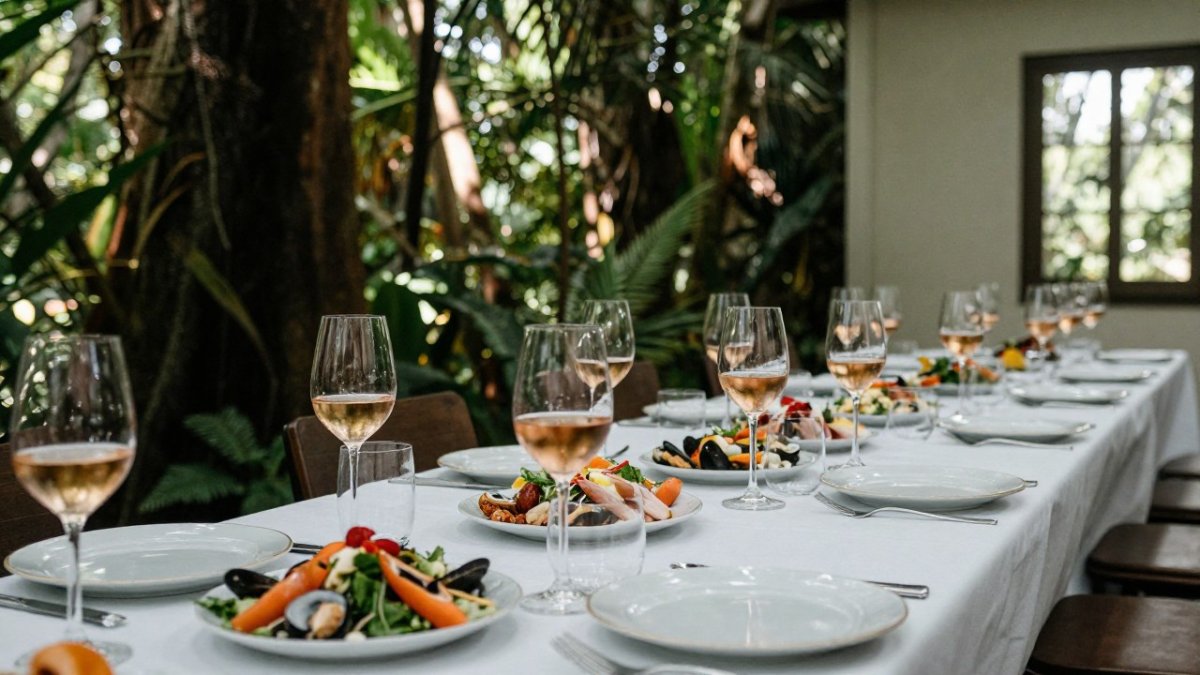
Warmer months call for lighter, fresher wines served well chilled, but the useful work is matching them to the dishes that actually appear on a modern Australian spring or summer menu. The table below is the season-by-season matrix most wedding wine guides leave out: it connects seasonal produce, a typical wedding dish and a specific wine style, so you can shortlist by course rather than by colour alone.
| Seasonal produce | Typical wedding dish | Wine style to shortlist | Why it works |
|---|---|---|---|
| Spring asparagus, peas, broad beans | Grilled asparagus with lemon and hazelnut | Dry Riesling or Sauvignon Blanc | High acidity cuts through the green, grassy notes and the citrus dressing |
| Summer tomatoes, basil, buffalo mozzarella | Heirloom tomato and burrata salad | Dry rosé or Vermentino | Light fruit and savoury finish match the creaminess without overpowering it |
| Prawns, oysters, calamari | Chilled seafood canapés | Dry sparkling or Picpoul | Bubbles and crisp acidity refresh the palate between bites |
| Barramundi, snapper, flathead | Grilled fish with herb butter | Chardonnay (unoaked) or Pinot Grigio | Moderate weight supports the fish without smothering delicate flesh |
| Chicken, pork, duck | Roast chicken or pork loin with stone fruit | Pinot Noir or dry rosé | Light red fruit and soft tannin suit white meat and fruit-based sauces |
| Mango, peach, berries | Summer pavlova or berry dessert | Moscato or late-harvest Riesling | Residual sweetness matches the fruit without clashing |
For the reception, pour a dry sparkling on arrival, keep a dry rosé flowing through the entrée, and offer a crisp Sauvignon Blanc or Riesling alongside. A light Pinot Noir covers guests who prefer red without weighing down a summer meal. The goal is refreshment, not intensity.
Watch out: warm-weather receptions are where serving temperature goes wrong most often. A dry rosé or Sauvignon Blanc served straight from a hot outdoor bar will taste flabby and alcoholic, so plan ice baths or a chilled esky and rotate bottles rather than leaving them on the table.
If your venue is coastal or outdoor, lean further towards high-acid whites and dry rosé, because salt air and heat both dull the perception of fruit. For a long lunch that runs into the evening, add one light red so the list does not collapse into white-only territory once the sun drops.
Seasonal Wedding Wine Pairings for Cooler Months
Cooler months reward richer, fuller-bodied wines that match heartier cooking. A fuller white such as an oak-aged Chardonnay and a smooth, rich red such as Cabernet Sauvignon or Shiraz suit slow-roasted meats, braises and root vegetables. A velvety Merlot or a spicy Mataro adds warmth without overwhelming the plate.
Sparkling wine still earns its place for the toast, but the still wines should carry more weight than they would in summer. If your autumn or winter menu leans on red meat and roasted dishes, build the list around two confident reds and one fuller white, and let the sparkling handle the celebration.
How Much Wine to Buy for a Wedding
How much wine to buy for a wedding depends on guest count, season, reception duration and service style, so plan by the glass and then convert to bottles rather than guessing by the case. A standard 750 ml bottle pours roughly five to six glasses, so the arithmetic matters more than the label.
As a working rule, allow one glass of sparkling on arrival, then roughly two to three glasses of still wine per guest across the meal, and adjust upward for a long reception or a warm day. The table below turns that into bottle estimates by guest count for a four-hour reception with a seated meal and a moderate drinking crowd.
| Guest count | Sparkling (arrival) | White | Red | Rosé | Alcohol-free |
|---|---|---|---|---|---|
| 50 | 10 bottles | 12 bottles | 10 bottles | 6 bottles | 8 bottles |
| 80 | 16 bottles | 20 bottles | 16 bottles | 10 bottles | 12 bottles |
| 120 | 24 bottles | 30 bottles | 24 bottles | 15 bottles | 18 bottles |
| 150 | 30 bottles | 38 bottles | 30 bottles | 19 bottles | 22 bottles |
These figures assume a mixed menu with seafood, chicken and red meat, and they are deliberately generous on white and alcohol-free because those are the categories most often under-catered. For a cocktail-style reception with passed canapés, shift the split towards sparkling and white and cut the red by roughly a third. For a long summer lunch that stretches past five hours, add around 20 per cent to the still wine totals.
Budget tiers are easier to plan once the bottle count is set, so choose within each tier rather than across the whole list. Ask your venue about its policy on returning unopened bottles before you finalise quantities.
| Course | Wine style | Guide per guest | Best for |
|---|---|---|---|
| Arrival | Dry sparkling | 1 glass | Toasts and welcome |
| Entrée | Dry rosé or crisp white | 1-2 glasses | Seafood, chicken, salad |
| Main | Light or fuller red | 1-2 glasses | Red meat, vegetables |
| All courses | Alcohol-free option | 1 glass | Non-drinkers |
Watch out: under-catering the alcohol-free option is a common planning mistake. Guests who do not drink still want something in their hand, and a warm day pushes soft-drink consumption higher than most couples expect. If you have specific quantity questions, contact our team for tailored beverage advice.
Bottle estimates by guest count for a four-hour reception
Dietary Requirements and Alcohol-Free Alternatives for Wedding Wine
Dietary requirements and alcohol-free alternatives belong in the wine plan from the start, not as an afterthought. A thoughtful list includes a quality alcohol-free sparkling or a botanical mocktail so non-drinking guests are not left with water. Pair these with the same care you give the wine: a crisp alcohol-free white suits seafood just as a Sauvignon Blanc does.
For guests with dietary needs, tell your venue early. Let the venue know your dietary requirements early so the team can discuss what is possible. Modern Australian menus built on seasonal produce make that flexibility far easier.
Plan Your Wedding Wine List at The Perch
Planning your wedding wine list at The Perch means pairing your menu with wines chosen for the season and the setting. Our custom menus are inspired by modern Australian cuisine and draw on local ingredients. You can explore our modern Australian menu to see the dishes your pairings will sit alongside, and view our current drink menu to start shortlisting styles.
Our old-growth rainforest setting shapes the mood of the day, and our versatile indoor and outdoor venues give you options. When you are ready to lock in the details, plan your Otways wedding with our team, and if you want to understand the seasonal logic behind the menu, read our guide to seasonal produce in the Otways.
The best wedding wine list is one that matches the season, the menu and the guests in the room. If you would like that planned for you, The Perch offers tailored event planning, custom menus built from our kitchen gardens, and seamless coordination with trusted vendors. Get started with The Perch and build a wine list your guests will remember.
Frequently Asked Questions
How do you choose wine for a wedding menu?
Start with the season and the dishes you are serving, not the label. Match lighter styles such as dry rosé, Riesling and Sauvignon Blanc to warmer-weather menus built around seafood, salad and vegetable dishes, and choose fuller whites, Pinot Noir or Shiraz for cooler-weather menus with red meat and richer sauces. A wedding wine selection guide should also cover sparkling wine for the toast, a couple of versatile still wines, and an alcohol-free alternative so every guest has something to drink.
Which wines are best for a summer wedding menu?
Warm-weather menus suit light and zesty wines served well chilled. Dry sparkling, dry rosé, Sauvignon Blanc, Riesling and Pinot Grigio work with seafood, chicken, salad and vegetable-based dishes, while a light Pinot Noir or Tempranillo can carry the red meat course without weighing the menu down. Keep the list short and versatile rather than matching a different bottle to every course, and make sure the wines are served cold on a hot day.
How much wine should you buy for a wedding?
Work on a per-guest basis rather than guessing by the bottle. A common starting point is roughly half a bottle of wine per guest across the reception, plus extra sparkling for the toast, then adjust for a long lunch, hot weather, a guest list that drinks lightly, or a strong showing of non-drinkers. Always allow a small buffer. Pricing depends on quantity, dates and delivery, so confirm current figures with your venue or supplier before you commit.
Should wedding wine be matched to every course?
Not necessarily. Most weddings work better with a tight, versatile list: sparkling for arrival and toasts, one or two whites, one or two reds, and an alcohol-free option. Match the wine to the overall style of the menu and the season, then let guests choose. If you want course-by-course seasonal wine pairings, keep it to the dishes that benefit most, such as seafood or a standout red meat course, and let the rest of the menu stay flexible.
