Last Updated: October 31, 2026
Quick Summary
The best time of year to see glow worms is the warmer, wetter stretch from late spring through early autumn, when damp conditions keep their habitats humid and their insect food active. For glow worm viewing, also arrive after dark on a still, humid night with as little artificial light as possible.
- Glow worms glow brightest in full darkness, usually from about an hour after sunset onward.
- The night after rain, or a damp humid evening with no downpour, often gives the best display.
- A bright full moon washes out the display, so a new moon or overcast-but-dry night is stronger.
- Let your eyes adjust for ten to fifteen minutes and keep torch use to a minimum.
- In cooler, drier months, prioritise a cave or sheltered overhang site over an exposed gully.
Table of Contents
- When Glow Worms Glow Best: Season and Time Explained
- Glow Worm Season: Warmer, Wetter Months Bring More Sightings
- What Time of Night Do Glow Worms Glow?
- Glow Worms After Rain: Why Damp Conditions Help
- Glow Worm Viewing Tips for a Quieter, Brighter Experience
- How Weather and Habitat Affect What You See
- Plan Your Glow Worm Evening at The Perch
- Frequently Asked Questions
When Glow Worms Glow Best: Season and Time Explained
The best time of year to see glow worms is the warmer, wetter stretch from late spring through early autumn, when damp conditions keep their cave and gully habitats humid and the insects they feed on stay active.
This guide covers both halves of that question.
Below, we’ll show you how season, weather, time of night and your own behaviour combine to shape what you actually see.
Glow Worm Season: Warmer, Wetter Months Bring More Sightings
Glow worm season peaks in the warmer, wetter months, roughly from late spring into early autumn. For a closer look at what each season brings to the region, see our guide to seasonal produce in the Otways. That is when humidity stays high, mossy banks stay damp, and the tiny insects glow worms eat are most plentiful.
The display itself is a mating signal. Each glow worm is the flightless female of a small fly species, and she lights up to attract a mate. The males fly, see the light, and come to her.
A few things drive the seasonal pattern:
- Moisture: glow worms dry out easily, so damp gullies and cave walls suit them best
- Warmth: milder nights keep insects moving and larvae feeding
- Humidity: still, humid air keeps the habitat from drying
- Rainfall: consistent rain keeps moss and soil moisture high
Why one season doesn’t fit every site
Seasonality varies by destination and species. A deep cave holds moisture and temperature far more steadily than a shallow forest gully, so cave populations can glow reliably in months when exposed gully populations fade. Coastal rainforest with reliable rainfall behaves differently from drier inland forest.
A common pattern practitioners describe is that the shoulder weeks just after sustained rain, in the warmer half of the year, give the most consistent displays in forest gullies, while deep caves are less season-dependent. Rather than promising a season, check the specific site’s recent conditions.
A simple seasonal calendar to plan around
Use this as a starting point, then confirm with the operator or land manager for the site you plan to visit:
| Period | General expectation in forest gullies | Cave sites |
|---|---|---|
| Late spring | Activity building as humidity rises | Reliable year-round |
| Summer | Strong displays after rain; humid nights best | Reliable; watch for heavy rain flooding |
| Early autumn | Often the sweet spot, warm, damp, still | Reliable |
| Late autumn to winter | Fewer, fainter displays in exposed gullies | More stable than gullies |
| Early spring | Patchy; improves with rainfall | Reliable |
If your dates are fixed, prioritise a cave or sheltered overhang site in the cooler, drier months, and a damp forest gully in the warmer months. Match the habitat to the season rather than chasing a single “best” month.
What Time of Night Do Glow Worms Glow?
Glow worms glow brightest in full darkness, usually from about an hour after sunset onward. There is no single magic minute, and the display builds as the sky darkens.
This is the part most guides gloss over: the best time of year and the best time of night are two different questions. Season sets the odds. Time of night sets the show.
What to expect through an evening:
- Sunset to dusk: too much ambient light, glow is faint
- One hour after sunset: display strengthens as darkness settles
- Mid-evening: usually the most reliable window
- Late night: still good, but your eyes and legs may disagree
Moon phase matters too. A bright full moon washes out the display, so a new moon or cloudy-but-dry night often gives a stronger show.
Glow Worms After Rain: Why Damp Conditions Help
Glow worms after rain tend to put on a better display, because damp conditions protect them from drying out and keep their hunting grounds productive.
The catch is timing. Go out in heavy rain and you’ll see little, and you’ll be miserable. The sweet spot is often the night after rain, or a damp, humid evening with no downpour.
Watch out: heavy rain can make trails slippery and gullies unsafe after dark. Check local conditions before you set out, wear proper footwear, and never walk into a flooded or unstable area just to get closer.
Glow Worm Viewing Tips for a Quieter, Brighter Experience
Good glow worm viewing tips all come back to one idea: protect the darkness. These insects are sensitive to light, noise and disturbance, and your own behaviour shapes what you see.
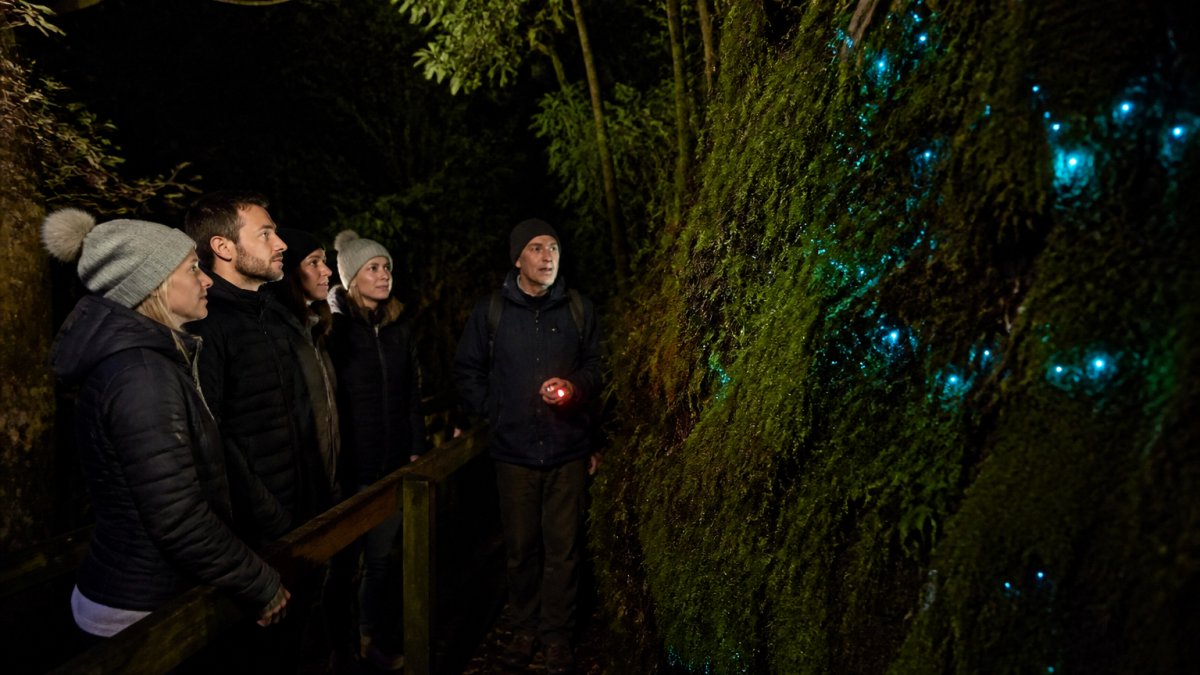
Here’s what we’d tell a friend before their first night out:
- Use red light only: white torches and phone screens disrupt the display and your night vision
- Keep noise low: talk softly, and skip the music
- Stay on the path: trampling damages the habitat glow worms rely on
- No flash photography: most sites restrict it, and it spoils the view for everyone
- Let your eyes adjust: give it ten to fifteen minutes in the dark
- Dress for damp: a light rain jacket and grippy shoes make the night far better
A common mistake is rushing in with a bright torch to “find” the glow worms. You’ll see less, not more.
How Weather and Habitat Affect What You See
Weather and habitat decide how much bioluminescence you actually witness on the night. Glow worms need stable humidity, shade, food and darkness. Get all four and the light display holds. Lose one and it fades. Understanding why each factor matters helps you check conditions before you travel rather than hoping for the best.
Habitat: the foundation
Damp gullies, cave walls, rock overhangs and mossy banks in dense forest hold moisture best. You can browse our gallery of photos to see the natural setting and surroundings for yourself. Open, dry ground won’t support them, no matter the season. The mechanism is simple: glow worms are soft-bodied and lose water easily, so they need surfaces that stay damp and shaded through the day. A mossy bank under a rock overhang keeps humidity high even when the surrounding forest dries.
Weather: what sharpens or suppresses the display
- Humidity and stillness: still, humid nights are ideal. Wind dries the habitat and scatters the display.
- Recent rain: damp conditions protect glow worms and keep their hunting grounds productive, but go out in heavy rain and you’ll see little. The sweet spot is often the night after rain.
- Drought: long dry spells thin populations, and recovery is slow.
- Temperature: milder nights keep insects moving and larvae feeding; a cold snap can quiet activity.
- Moon and ambient light: a bright full moon washes out the display, so a new moon or an overcast-but-dry night often gives a stronger show.
How to check conditions before you go
A few practical checks will tell you more than any generic seasonal claim:
- Look at recent rainfall for the site over the past week, sustained damp, not a downpour, is what you want.
- Check the forecast for wind and humidity, not just temperature. A still, humid evening beats a clear, breezy one.
- Check moon phase and plan around a new moon if your dates are flexible.
- Ask the operator or land manager about current sightings, local knowledge reflects conditions on the ground.
- Confirm access and safety after rain, since trails and gullies can become slippery or unsafe after dark.
Heavy rain can make trails slippery and gullies unsafe after dark. Check local conditions before you set out, wear proper footwear, and never walk into a flooded or unstable area just to get closer.
Why sightings vary, and why no one can guarantee them
Seasonal advice describes odds, not certainties. Populations fluctuate with rainfall, habitat condition and disturbance, and a site that glowed strongly last month can be quiet tonight. Reputable operators and conservation authorities describe typical patterns rather than promising a display. Plan for the conditions, give yourself a second evening if you can, and treat a strong showing as the reward for good timing rather than a guaranteed outcome.
Responsible viewing protects all of this. Stay on marked tracks, keep lights low, and treat the site gently. Populations are slow to recover when habitat is damaged.
Plan Your Glow Worm Evening at The Perch
Planning a glow worm evening is straightforward once you know the two variables: aim for the warmer, wetter months, and arrive after dark on a still, humid night. Build in time for your eyes to adjust, and keep your torch red and dim.
At The Perch, you can enjoy old-growth rainforest trails with resident glow worms. Here’s how to plan your visit:
- Time it for late spring to early autumn for the best odds
- Arrive before sunset and settle in
- Walk the trails at dusk as the forest darkens
- Keep lights low and voices soft
Ready to make a night of it? You can host your next event at The Perch, explore our modern Australian menu, or contact our team with any timing questions.
| Plan element | What to aim for | Why it matters |
|---|---|---|
| Season | Late spring to early autumn | Damp, humid habitat, more active insects |
| Time of night | One hour after sunset onward | Full darkness brings the strongest glow |
| Weather | Still and humid, night after rain | Protects habitat, sharpens the display |
| Moon | New moon or overcast | Less washout from ambient light |
| Your behaviour | Red torch, quiet, on-path | Preserves the display and the habitat |
The hardest part of glow worm viewing isn’t finding them. It’s getting the season, the hour and the conditions to line up on the same night. That’s where a little local knowledge helps.
At The Perch, we pair old-growth rainforest trails and resident glow worms with a modern Australian menu built on produce from our on-site kitchen gardens, plus indoor and outdoor spaces that work whatever the weather does.
Frequently Asked Questions
What time of year are glow worms easiest to see in the Otways?
The warmer, wetter months from late spring through early autumn usually bring the most consistent glow worm viewing, because damp conditions suit their prey and the larvae stay active. That said, glow worms are visible year-round in cool, dark rainforest gullies. Winter nights can still deliver good sightings, especially after rain, though you will need to dress for colder, wetter weather and check track conditions before setting out.
Do glow worms have a season, or are they visible all year?
Glow worms are present all year, but their light display varies with conditions. Glow worm season is less about a fixed calendar and more about moisture, darkness and temperature. The warmer, wetter months tend to produce more consistent sightings, while cold or very dry spells can quieten activity. Planning around recent rainfall and choosing a dark, humid gully gives you the best chance of a strong display, whatever month you visit.
Does rain affect glow worm sightings?
Rain generally helps rather than hurts. Glow worms after rain are often more visible because damp conditions keep the rainforest humid and support the small insects they feed on. Heavy downpours can reduce visibility and make tracks slippery, so aim for the hours after rain eases rather than during a storm. Bring a waterproof jacket, wear shoes with grip, and keep torch use minimal so your eyes stay adjusted to the dark.
What should you avoid doing when viewing glow worms?
Keep noise to a minimum, avoid shining white torches or phone lights directly at the glow, and never touch the banks or cave walls where glow worms live. Flash photography is usually restricted because light disturbs the display. Stay on marked paths, arrive before full darkness so you can settle in quietly, and follow any guide instructions. These simple habits protect the population and give everyone in your group a better view.
