Last Updated: November 21, 2026
Quick Summary
The best relaxing environment to enjoy views, wine, and cocktails for bespoke event planning is one where the setting does the entertaining for you: natural light, a green backdrop, and comfortable spaces that let guests settle in rather than shout over each other. An open-air terrace gives guests room to move between conversation and quiet, which is exactly what a cocktail reception needs.
- Stand in a venue at your event’s start hour and watch how the light falls.
- Ask each venue to itemise venue hire, minimum spend, staffing and add-ons separately.
- A low hire fee with a high minimum spend can cost more than a higher headline fee.
- Confirm step-free paths, accessible toilets, and seating for guests who cannot stand long.
- Build the itinerary so the outdoor block has a lower-effort alternative.
Table of Contents
- What Makes a Relaxing Environment for Views, Wine and Cocktails
- Questions to Ask When Booking an Event Venue
- Bespoke Cocktails, Wine and Food Pairing for Private Events
- Corporate Retreat Itinerary Examples for Scenic Settings
- Planning Corporate Retreat Duration and Nature-Based Team-Building Activities
- Weather Contingencies, Seasonal Planning and Guest Accessibility
- Reserve Your Bespoke Event at The Perch
- Frequently Asked Questions
What Makes a Relaxing Environment for Views, Wine and Cocktails
The best relaxing environment to enjoy views, wine, and cocktails for bespoke event planning is one where the setting does the entertaining for you: natural light, a green backdrop, and comfortable spaces that let guests settle in rather than shout over each other. Atmosphere is not decoration. It is the foundation every other decision rests on.
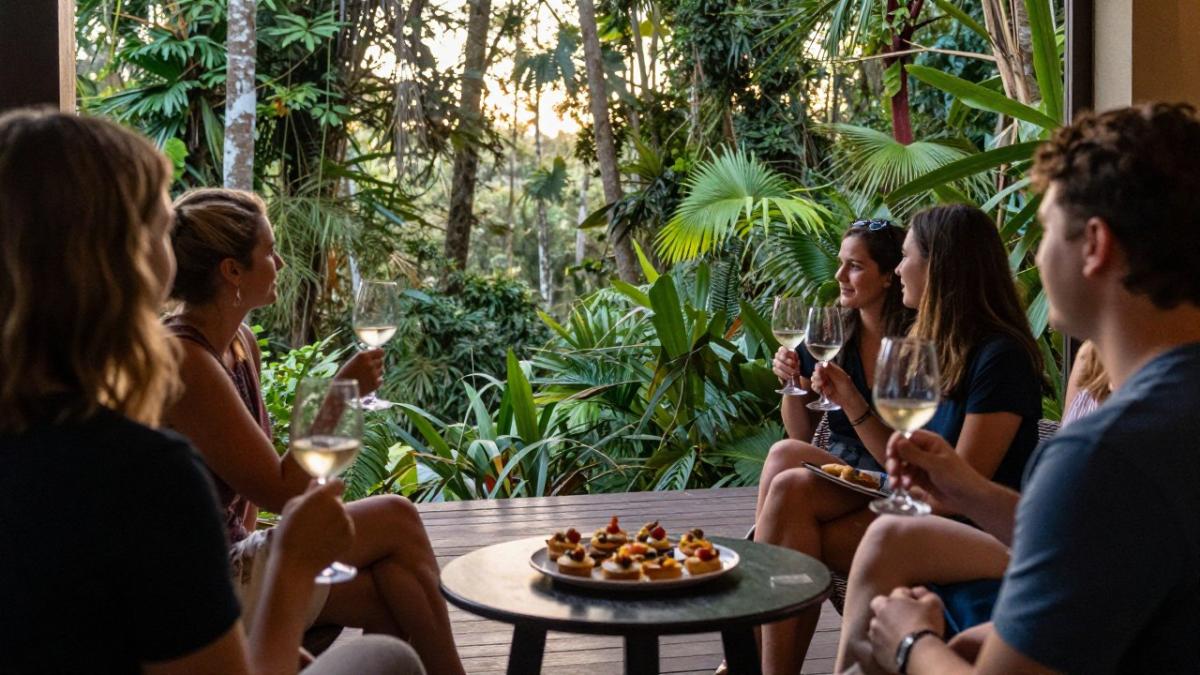
A relaxing environment changes how people behave. Guests linger longer, talk more openly, and remember the day as a feeling rather than a schedule. That matters whether you are hosting a wedding, a birthday celebration, or a corporate retreat.
The role of natural light, ambience and open-air terraces
Light sets the mood before anyone touches a glass. Late-afternoon light through a canopy of trees softens a space in a way no lighting rig can copy.
Ambience comes from the layers around the light: timber underfoot, greenery at eye level, the sound of birds rather than traffic. A garden setting or rainforest backdrop adds a calm that a function room cannot manufacture.
Questions to Ask When Booking an Event Venue
The right questions turn a pretty brochure into a real plan. Ask about capacity, wet-weather options, menu flexibility, and who coordinates on the day. A venue that answers clearly and quickly is usually a venue that runs events well.
A practical venue-selection checklist
Work through this before you pay a deposit:
- Can the space hold your guest count comfortably, indoors and outdoors?
- What is the wet-weather backup, and is it a separate room or the same space?
- How flexible is the menu for dietary requirements and casual bites?
- Are beverage options customisable, including non-alcoholic choices?
- Is there a clear event timeline and a named coordinator?
- What is included in venue hire, and what is charged separately?
- Are the spaces accessible for older guests or anyone with mobility needs?
- Can you visit in person at your event’s time of day?
The last point matters more than people expect. A venue can look stunning in a midday photo and feel completely different at dusk. Visit at your start time, walk the route your guests will take, and listen to the noise level.
Budget questions most venue brochures avoid
A venue quote is rarely the whole cost, so ask for the numbers in writing before you compare options. A venue quote is often made up of several cost components, such as venue hire, a minimum spend on food and beverage, staffing and service charges, and add-ons such as styling, audio-visual, and extended hours.
Specific questions that surface the real cost:
- What is the venue hire fee, and does it reduce or disappear once you hit a food and beverage minimum?
- Is the minimum spend per person or per event, and does it include service staff and glassware?
- What is the charge for additional hours, and when does the standard booking end?
- Are there separate fees for cakeage, corkage, or bringing in an external supplier?
- What deposit is required, and what is the cancellation and postponement policy?
- Is a bond held, and what conditions release it in full?
Watch out: a low hire fee paired with a high minimum spend can cost more than a venue with a higher headline fee and a lower minimum, so always compare the total committed spend rather than the hire line alone.
Accessibility, transport and guest comfort
Accessibility is where relaxed events are quietly won or lost. Ask whether paths between the ceremony, dining, and bar areas are step-free, whether toilets include an accessible option, and whether seating is available for guests who cannot stand for long periods.
Transport deserves the same scrutiny. Ask how guests arrive, where they are dropped off, whether the final approach is lit after dark, and whether the venue can recommend local transport providers.
If you are working through this list and want to put your questions to a venue directly, you can contact The Perch team for reservations and event enquiries.
Bespoke Cocktails, Wine and Food Pairing for Private Events
Bespoke event planning lives or dies on the drinks and the plate. A cocktail reception works best when the beverage list is short, seasonal, and matched to food that is easy to hold and easy to enjoy. Fewer, better choices beat a long list every time.
Beverage options, casual bites and dietary requirements
Start with a signature cocktail or two, then build around wine that suits the menu rather than the other way around. Casual bites should be one or two mouthfuls, designed to be eaten standing up without a knife and fork.
Dietary requirements are not an afterthought. A custom menu should account for allergies, vegetarian and vegan guests, and cultural preferences without making anyone feel like a problem. Ask how the kitchen handles cross-contamination, and get the answer in writing.
At The Perch, dishes are inspired by modern Australian cuisine and crafted from local ingredients and produce from our on-site kitchen gardens, including native berries, fruits, and herbs. You can explore our seasonal menu and view the current drink menu to see how cocktails and wine might pair with your event.
Corporate Retreat Itinerary Examples for Scenic Settings
A corporate retreat itinerary should balance structured sessions with genuine downtime, and a scenic setting makes that balance easier. Here are three corporate retreat itinerary examples you can adapt, each with the planning logic behind it.
The throughline is rhythm: think, move, eat, talk, decide. Retreats that pack every hour with content tend to produce tired teams and vague outcomes.
Budgeting a retreat without hidden surprises
Retreat budgets are typically built from a handful of cost lines, and asking for each one separately keeps comparisons honest. Budgets often need to account for venue hire or a day-delegate rate, catering, beverage packages, team-building facilitation, audio-visual and breakout-room needs, and transport if the setting is remote. A per-person day-delegate rate can be a useful unit for comparing venues, provided you confirm exactly what it includes.
Questions worth putting in writing:
- Does the day-delegate rate include room hire, catering, and basic audio-visual, or are those charged separately?
- What is the minimum group size, and how does pricing change below it?
- Is there a reduced rate for a half-day, and where is the cut-off time?
- What deposit and cancellation terms apply if the retreat date moves?
Watch out: a quoted per-person rate that excludes audio-visual, facilitation, and transport can land well above a venue that bundles those items, so compare the all-in figure per attendee rather than the headline rate.
Making the itinerary work for every guest
A retreat that respects energy levels and access needs gets better engagement from everyone. Build the itinerary so the outdoor block has a lower-effort alternative: a seated garden tour or a short loop rather than a long hike. Confirm step-free routes between session rooms, dining, and outdoor areas, and check that seating is available at each stop.
Non-drinkers deserve the same care as everyone else. Ask the venue whether it offers alcohol-free cocktails and non-alcoholic options at the bar, and make sure the sunset reception does not become the only social anchor of the day.
Planning Corporate Retreat Duration and Nature-Based Team-Building Activities
Corporate retreat duration should match the outcome you want. A shorter session can suit a single decision or reset, while a longer one can suit planning and relationship-building. Longer is not automatically better; a tight, well-paced day often beats a sprawling two-day event.
Nature-based team-building activities that suit the setting
The setting itself is the activity. Walking trails through old-growth rainforest give teams a shared experience that a conference room cannot. Wildlife spotting, from koalas to king parrots, can create unscripted moments that guests remember afterwards.
Other options that work well in a scenic environment:
- Nature walks on the on-site rainforest trails
- Garden or kitchen-garden tours that connect the team to the food
- Outdoor morning sessions with fresh air instead of fluorescent light
- Glow worm viewing as a calm close, where sightings are not guaranteed
Keep activities optional where you can. Not every guest wants a long hike, and a retreat that respects energy levels gets better engagement from everyone.
Weather Contingencies, Seasonal Planning and Guest Accessibility
Weather planning is an important part of any outdoor event. Every outdoor element benefits from an indoor alternative, and every season brings its own considerations.
Practical contingencies to confirm with any venue:
- A wet-weather plan, such as an indoor space
- Heating, shade, and shelter for outdoor terraces
- A clear decision deadline for switching to the indoor plan
- Umbrellas, covered walkways, or transport between spaces
- Accessible paths, toilets, and seating for guests with mobility needs
Seasonal planning also affects the guest experience. Ask what the garden and surrounds look like in your month, and whether wildlife sightings are more likely at certain times. Responsible beverage service also belongs in your planning.
To picture how the grounds and terraces look across the seasons, browse our gallery before you visit.
Here are the practical contingencies the article says to confirm with any venue before your event.
| Item | What to confirm |
|---|---|
| Wet-weather plan | An indoor space as an alternative |
| Outdoor terraces | Heating, shade, and shelter |
| Plan switch | A clear decision deadline for moving indoors |
| Guest movement | Umbrellas, covered walkways, or transport between spaces |
| Accessibility | Accessible paths, toilets, and seating for mobility needs |
| Seasonal look | What the garden and surrounds look like in your month |
| Wildlife | Whether sightings are more likely at certain times |
Reserve Your Bespoke Event at The Perch
The difference between a good event and an unforgettable one usually comes down to the setting and the people running it.
We work with couples and corporate planners to build tailored event plans, including vendor recommendations, for groups of many sizes. Enquire about hosting your event with personalised menus and versatile indoor and outdoor spaces.
Ready to plan a bespoke event in a setting that does the entertaining for you? Get started with The Perch and reserve a date that your guests will remember long after the last glass is cleared.
Frequently Asked Questions
How do you choose a venue for a relaxed corporate retreat?
Start with the setting: look for a venue with natural light, outdoor spaces and a calm ambience, then confirm capacity, indoor backup and whether catering and beverage service are in-house. Ask for a site visit at the time of day your event will run so you can judge the views and noise.
What questions should you ask when booking an event venue?
Ask about capacity for your group size, wet-weather options, accessibility, parking, and whether you can bring your own suppliers. Confirm what is included in venue hire, how beverage service is priced, and whether dietary requirements can be accommodated. Also ask about setup and pack-down times, noise limits, and who coordinates on the day. Getting these answers in writing before you pay a deposit prevents surprises later in the bespoke event planning process.
How long should a corporate retreat last?
Corporate retreat duration should match your objectives. Shorter sessions suit focused strategy work, while longer ones give more room for planning and genuine downtime. Build in buffer time so the itinerary does not feel rushed, and keep one unstructured block for guests to relax.
What food and drinks work well for a corporate event?
Confirm dietary requirements in advance, and ask the venue which beverage and service formats it offers. Menus built around local produce and kitchen-garden ingredients give guests something to talk about. Ask the venue how beverage service is structured and priced before you lock in numbers.
