Last Updated: November 16, 2026
Quick Summary
The difference in luxury dining vs casual cafes on Great Ocean Road comes down to time, money and attention. Luxury dining is a planned, seated experience with table service, multi-course menus and a higher spend, while casual cafes are faster and built around road-trip rhythm.
- Luxury dining typically costs $80-$180+ per person for three courses with a glass of wine.
- Casual cafes run $12-$35 for a main, coffee or light meal.
- Book fine dining at least several days ahead, and further out for weekends and summer.
- Arrive before 9am for cafe breakfast in peak season.
- The western end of the coast has far fewer venues than the eastern end.
Table of Contents
- Luxury Dining vs Casual Cafes on the Great Ocean Road: The Core Difference
- A Quick Comparison: Cost, Ambience, and Service at a Glance
- Great Ocean Road Restaurants for Special Occasions and Fine Dining
- Great Ocean Road Cafes for Quick Meals, Coffee, and Road-Trip Stops
- Farm-to-Table Dining on the Great Ocean Road: What Local Produce Really Means
- Great Ocean Road Restaurants with a View: Coastal, Rainforest, and Garden Settings
- How to Choose by Itinerary, Occasion, and Travel Party
- Reserve Your Table at The Perch in Lavers Hill
- Frequently Asked Questions
Luxury Dining vs Casual Cafes on the Great Ocean Road: The Core Difference
The difference in luxury dining vs casual cafes on Great Ocean Road comes down to time, money and attention. Luxury dining is a planned, seated experience with table service, multi-course menus and a higher spend.
One is not better than the other. A long lunch with wine and a rainforest view suits an anniversary.
Below, we break down cost, ambience, service and timing so you can plan each meal stop with confidence.
A Quick Comparison: Cost, Ambience, and Service at a Glance
Most food guides for this coast tell you where to eat but not what it will cost, which is the single biggest factor in choosing between a long lunch and a quick cafe stop. The table below compares the two formats by the numbers that actually shape a road-trip budget. Pricing varies by venue, menu and season, so always check current prices directly with each venue before you plan your budget.
| Factor | Luxury dining | Casual cafes |
|---|---|---|
| Typical spend per person | $80-$180+ for three courses with a glass of wine | $12-$35 for a main, coffee or light meal |
| Coffee | $5-$7 | $4.50-$6 |
| Pace | 90 minutes to 2+ hours | 15-40 minutes |
| Service | Table service, dedicated staff | Counter or quick table service |
| Booking | Usually essential | Often walk-in |
| Ambience | Intimate, designed, scenic | Relaxed, bright, functional |
| Best for | Occasions, celebrations | Road-trip fuel, quick stops |
| Tipping | Not expected | Not expected |
What the numbers mean for a day on the road
Value is not the same as cheap. A quick cafe meal can sometimes be better value than a long sitting, depending on how you want to spend your day. The reverse is true on a wet winter afternoon when the point of the stop is the room, the service and the view.
Luxury dining: pros and cons
The upside is the experience: slower pacing, considered cooking, local produce given room to shine, and settings built for a long conversation. The downside is commitment. You need to book, you need to allow time, and you need to be comfortable with a larger bill.
- Pro: Dishes are cooked to order and often showcase regional produce.
- Pro: Scenic settings and intimate rooms suit celebrations.
- Pro: Set menus make the final bill predictable.
- Con: Walk-ins are risky on weekends and in peak season.
- Con: A long lunch can eat into your driving schedule.
Casual cafes: pros and cons
Casual cafes win on flexibility. You pull in, eat well, and get back on the road without rearranging your day. The trade-off is a narrower menu, busier rooms at peak times, and less of a sense of occasion.
- Pro: Fast, affordable and easy to fit around sightseeing.
- Pro: Great for breakfast, coffee and light meals.
- Pro: Lower risk if plans change mid-drive.
- Con: Limited menus and shorter trading hours in smaller towns.
- Con: Peak-hour queues can slow a tight itinerary.
Watch out: weekend and public-holiday surcharges may apply at some venues, so check pricing before you order.
Great Ocean Road Restaurants for Special Occasions and Fine Dining
Book these for anniversaries, proposals and milestone birthdays. Fine dining along the coast rewards planning: reserve ahead, and tell the venue about dietary needs when you book rather than on the night.
If you are weighing up a splurge, look at the menu before you commit. Explore our menu to see how a modern Australian kitchen builds a celebration meal around local produce and seasonal dishes.
Great Ocean Road Cafes for Quick Meals, Coffee, and Road-Trip Stops
Treat cafes as the engine room of a road trip. They open earlier than restaurants, move faster, and sit close to the walks, lookouts and beaches you are actually there to see. Order at the counter, keep the stop to half an hour, and you will still make three lookouts before lunch.
A few habits make cafe stops smoother:
- Arrive before 9am for breakfast in peak season.
- Check closing times in smaller towns, where kitchens often shut mid-afternoon.
- Carry cash as a backup in areas with patchy mobile coverage.
Coffee culture here is strong, and a good flat white is a legitimate reason to stop.
Farm-to-Table Dining on the Great Ocean Road: What Local Produce Really Means
Farm-to-table dining on the Great Ocean Road means menus built around what growers, fishers and producers in the Otways and nearby farming districts are harvesting that week. It is not a label you can verify from a menu alone.
At The Perch, our on-site kitchen gardens feature native berries, fruits and herbs.
If you want to understand what is actually growing in the region across the year, read our guide to seasonal produce in the Otways. To see the growers and makers we work with, meet our partners.
Great Ocean Road Restaurants with a View: Coastal, Rainforest, and Garden Settings
A view changes the meal, and the region offers three distinct settings. Coastal dining gives you surf, salt air and sunset light. Rainforest settings trade the ocean for tree ferns, birdsong and cool shade. Garden dining sits between the two, with manicured beds and open lawns.
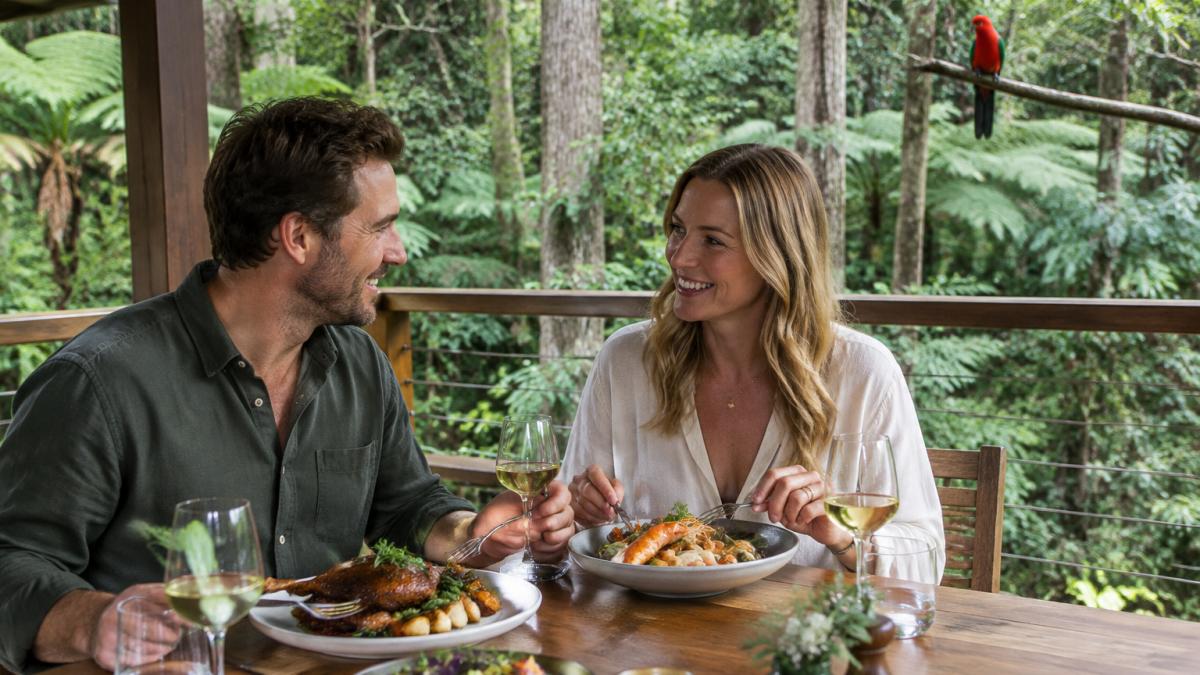
Our dining room sits among old-growth rainforest, surrounded by native wildlife. You can see our gallery for photos of the gardens, dining rooms and setting before you decide.
How to Choose by Itinerary, Occasion, and Travel Party
When weighing luxury dining vs casual cafes on Great Ocean Road, match the meal to the day, not the other way around. The coast is long and the driving is slower than the map suggests, so the meal stop has to fit the route. A couple driving from Torquay to Port Campbell in one day needs fast breakfast and a short lunch. A group staying two nights can afford one long, booked dinner. Families with young children do better with casual cafes and early sittings.
Town-by-town meal timing
Think of the route in three legs. The eastern leg (Torquay through Anglesea and Lorne) has the densest cafe strip and the easiest parking, so it suits a quick breakfast or coffee stop. The middle leg (Apollo Bay and the Otways hinterland) is where a booked lunch makes most sense, because you are already off the main road and the detours reward a slower stop. The western leg (Port Campbell and the Twelve Apostles) is thin on options, so plan your last proper meal before you commit to the final stretch.
A practical pattern many drivers use:
- Breakfast: eastern towns, before 9am in peak season.
- Coffee: any town with a main-street strip; allow 20 minutes.
- Lunch: middle leg, either a booked long lunch or a 30-minute cafe stop.
- Dinner: book ahead near where you are staying, not where you started.
Driving logistics that affect meal choice
The road is winding and two-lane for long stretches, and travel times between towns are routinely longer than a mapping app suggests once you add lookouts, parking and photo stops. Parking in the busiest coastal towns is limited in summer, and a cafe stop with a car park is often worth more than a better-reviewed venue you have to circle for ten minutes. If you are towing a caravan or driving a large vehicle, favour venues with off-street parking and avoid the tightest main-street strips at lunchtime.
Booking, opening hours and seasonal availability
Book fine dining at least several days ahead, and further out for weekends, school holidays and summer. Many cafes take walk-ins, so consider arriving outside peak times. Opening hours vary widely between towns, and some kitchens close entirely in winter or reduce to weekend-only trading. Always confirm hours directly with the venue on the day, and check whether a public holiday affects trading.
Dietary requirements and accessibility
Tell the venue about dietary requirements when you book, not when you sit down. Kitchens that cook from scratch can usually adapt, but they need notice. Ask about step-free access and parking if anyone in your group has mobility needs, as older coastal buildings vary considerably. Families should ask about high chairs and child-sized portions before committing to a long sitting.
Choosing by occasion and travel party
- One-day drive: cafes for breakfast and lunch, one booked dinner.
- Weekend away: one fine-dining meal, cafes for everything else.
- Celebration trip: book the restaurant first, then build the itinerary around it.
- Family with young children: casual cafes, early sittings, venues with parking.
- Group of friends: share-style menus and a booked table beat a walk-in.
Watch out: the western end of the coast has far fewer venues than the eastern end, so if you are heading towards the Twelve Apostles for sunset, eat before you go rather than assuming you will find a table on the way back.
Reserve Your Table at The Perch in Lavers Hill
You do not have to choose between a special meal and a scenic stop. The Perch brings both together in one place, with a modern Australian menu shaped by our kitchen gardens and a setting surrounded by old-growth rainforest.
Get in touch with our team to ask about reservations, dietary requirements or private events.
Planning a Great Ocean Road trip means making dozens of small decisions. Let the meal be the easy one.
Frequently Asked Questions
What is the difference between luxury dining and casual cafes on the Great Ocean Road?
Luxury dining focuses on multi-course menus, table service, and curated wine lists, often with a higher price per head and a need to book ahead. Casual cafes offer lighter meals, coffee, and quicker turnaround, usually without reservations. The right choice depends on your occasion, budget, and how much time you want to spend at the table. For a milestone meal, book a fine-dining venue; for a road-trip stop between lookouts, a cafe works better.
Where can you find farm-to-table dining on the Great Ocean Road?
Farm-to-table dining on the Great Ocean Road centres on venues that grow their own produce or source from nearby growers. Look for on-site kitchen gardens, seasonal menu changes, and dishes built around regional ingredients. The Perch in Lavers Hill is one example, using native berries, fruits, and herbs from its kitchen gardens alongside local produce. Ask venues directly where their ingredients come from; genuine farm-to-table operators can name their suppliers and explain what is in season.
Is luxury dining on the Great Ocean Road worth the extra cost?
It depends on what you value. A fine-dining meal typically costs more per head than a cafe lunch, but the difference buys table service, a curated wine list, and often a setting you would not get at a casual stop. For anniversaries, engagements, or corporate dinners, the extra spend usually feels justified. For a family lunch mid-drive, a cafe delivers better value. Compare menus online and check whether bookings are required before committing.
Can you combine a special-occasion meal with casual cafe stops on the same trip?
Yes, and it is a practical way to manage your budget. Plan one booked fine-dining meal as the centrepiece, then fill breakfast, coffee, and light lunches with casual cafes along the route. Keep driving distances in mind: the Great Ocean Road stretches over 240 kilometres, so group your stops by town. Book the special meal first, then build cafe stops around it. This approach gives you variety without overspending on every meal.
What should you look for in a Great Ocean Road restaurant with a view?
Check what the view actually is: coastal, rainforest, or garden settings all photograph differently and suit different occasions. Confirm whether the view is from indoor seating or an outdoor deck, since weather affects the experience. Ask about booking windows for window tables, and check opening hours, as some venues close between lunch and dinner. Dietary requirements and accessibility are also worth confirming in advance, especially for groups.
