
Table of Contents
- Where to Spot Koalas in Otways: Best Locations and Trails
- Best Time to See Koalas in Cape Otway
- Lavers Hill Wildlife Trails for Koala Spotting
- Ethical Wildlife Viewing Practices: How to Observe Koalas Responsibly
- Koala Behaviour and Habitat: What to Look For
- Safety and Conservation Guidelines for Visitors
- What to Bring for a Koala Spotting Adventure
- Accessibility and Planning Your Visit
- Frequently Asked Questions
Last Updated: September 16, 2026
Where to Spot Koalas in Otways: Best Locations and Trails
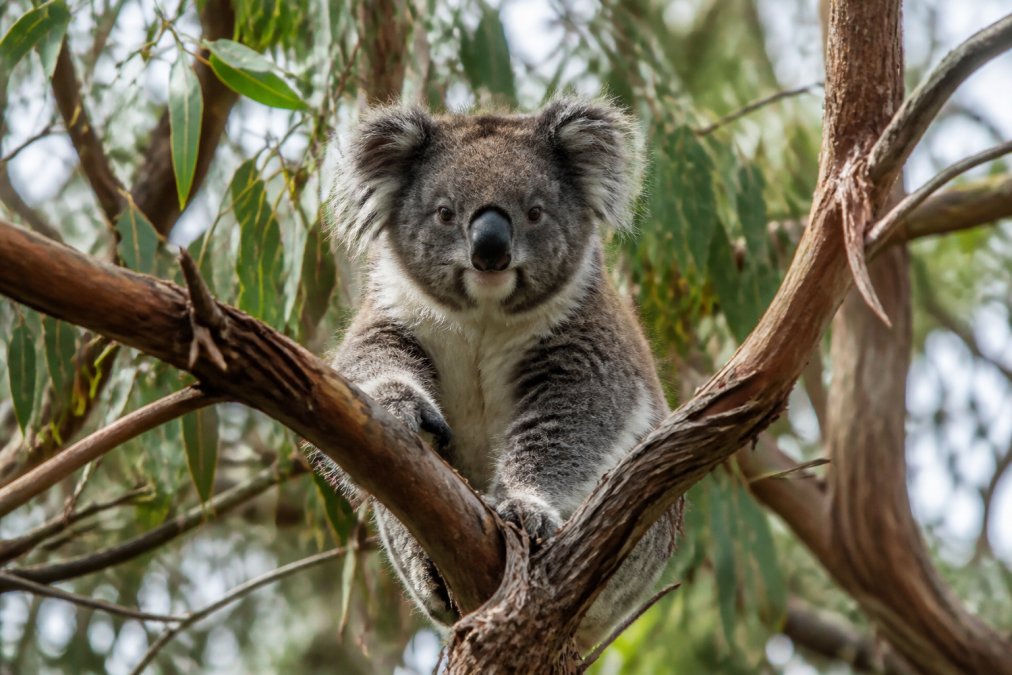
Yes, you can see koalas in Otways, and the region’s old-growth eucalypt forest makes sightings remarkably reliable compared with much of the state. Wild koalas live throughout the Otways, and the coastal forests around Cape Otway and the inland bush near Lavers Hill give visitors some of the best odds in Victoria. This guide from The Perch covers where to look, when to go, and how to watch them without disturbing them.
Cape Otway and the Great Ocean Road
The stretch of the Great Ocean Road running toward Cape Otway is the most productive area for spotting koalas in Otways. The road passes through coastal forest where koalas sit low enough to see from a car, and Great Otway National Park protects the habitat that keeps them there.
Lavers Hill and Surrounding Forests
Lavers Hill sits at the heart of the Otways and is a natural base for wildlife watching. The forests around the township are cooler and wetter than the coast, supporting dense eucalyptus stands and a healthy koala population.
Best Time to See Koalas in Cape Otway
The best time to see koalas in Cape Otway is early morning or late afternoon, when the animals are most active. Koalas are largely nocturnal, sleeping much of the day in the fork of a tree; dawn and dusk are when they move between branches to forage, making them far easier to spot.
Look for fresh scratch marks on eucalyptus trunks and droppings at the base of a tree. These signs tell you a koala is using that tree regularly, so scan the canopy directly above rather than wandering at random.
Lavers Hill Wildlife Trails for Koala Spotting
Lavers Hill wildlife trails give walkers a quieter alternative to roadside spotting, with several short walks through koala habitat. They suit different fitness levels, and most take under an hour.
Trail Highlights and Difficulty
| Trail type | Typical duration | Difficulty | Best for |
|---|---|---|---|
| Short forest loop | 20-30 minutes | Easy | Families, quick stops |
| Rainforest walk | 45-60 minutes | Easy to moderate | Photography, birdwatching |
| Longer ridge track | 1.5-2 hours | Moderate | Serious wildlife watchers |
| Roadside pull-ins | 5-10 minutes | Easy | Drive-by sightings |
Walking quietly raises your chances considerably. Koalas rely on hearing to detect threats, so a group moving slowly and talking softly will see more than one crashing through the undergrowth.
Ethical Wildlife Viewing Practices: How to Observe Koalas Responsibly
Ethical wildlife viewing means keeping your distance, staying quiet, and never interfering with an animal’s natural behaviour. Koalas in Otways are wild, not tame, and stress affects them more than most visitors realise. Each rule below maps to a specific way human presence harms koalas. Respecting these boundaries ensures that the animals remain undisturbed, allowing for a deeper connection through immersive wildlife storytelling that honors the integrity of their natural habitat.
Why the rules exist
- Distance (10 metres minimum). Koalas have poor close-range vision but sharp hearing. A person inside that radius registers as a threat, and the animal climbs higher or moves trees, burning energy it needs for digestion.
- No touching or feeding. Eucalyptus leaves are toxic to most animals, and koalas rely on a specialised gut microbiome to process them. Human food causes serious digestive illness, and handling a wild koala can transfer infections in both directions.
- No drones. The noise is outside the range koalas evolved to interpret, triggering a sustained stress response rather than a brief startle, keeping an animal alert for an extended period.
- Dogs on lead. Even a quiet dog is a recognised predator. A koala that flees a dog may abandon a joey or fall.
- Stay on tracks. Off-track walking compacts soil, damages understorey, and fragments the habitat connectivity that keeps koala populations viable.
Ethical wildlife photography
The harder skill is getting a usable image without changing the animal’s behaviour. A few principles make the difference:
- Use focal length, not footsteps. A 200-300mm lens on a crop-sensor body gives a frame-filling shot from a respectful distance. If you want to step closer, you need a longer lens, not a closer approach.
- Watch for stress signals before you shoot. Flattened ears, a fixed stare in your direction, or a sudden shift higher into the canopy all mean back off. A koala that was asleep and is now watching you has already been disturbed.
- Never use flash on a nocturnal animal. Koalas are most active in low light, exactly when flash is most tempting and most harmful. Raise ISO instead, or use a slower shutter with a beanbag or tripod.
- Do not bait, call, or play recordings. Playback and food lures change natural behaviour and, in a protected park, may breach wildlife regulations.
- Do not geotag precise koala locations on social media. Sharing exact coordinates concentrates visitor pressure on individual trees and individual animals. Share the region, not the tree.
Approaching a koala to get a better photo can cause it to move suddenly between branches. Falls are a leading cause of injury to wild koalas, and a stressed animal may abandon a joey. Keep your distance and let the animal come to you.
If you see something wrong
If you witness a koala being handled, fed, or harassed, do not confront the person. Note the location and time and report it to the park authority or a licensed wildlife carer. If you find an injured or grounded koala, do not pick it up, call a wildlife rescue service and stay nearby to guide them in.
Koala Behaviour and Habitat: What to Look For
Koalas are tree-dwelling marsupials that feed almost exclusively on eucalyptus leaves, and understanding their habits makes spotting far easier. They sleep much of the day wedged into a fork where branches meet the trunk, which is why so many visitors walk straight past them.
Safety and Conservation Guidelines for Visitors
Conservation guidelines protect both the animals and the people watching them. The Otways forest is a protected area, and visitors share responsibility for keeping it that way.
- Stay on designated tracks to avoid trampling understorey and damaging habitat.
- Take all rubbish with you; food scraps attract predators and pests.
- Report injured or distressed wildlife to a licensed wildlife carer or park authority.
- Do not remove plants, rocks, or fallen timber from the forest.
- Drive slowly on forest roads, especially at dawn and dusk when wildlife is active.
What to Bring for a Koala Spotting Adventure
The right gear turns a lucky sighting into a reliable one. Pack for changing conditions and long periods of quiet observation.
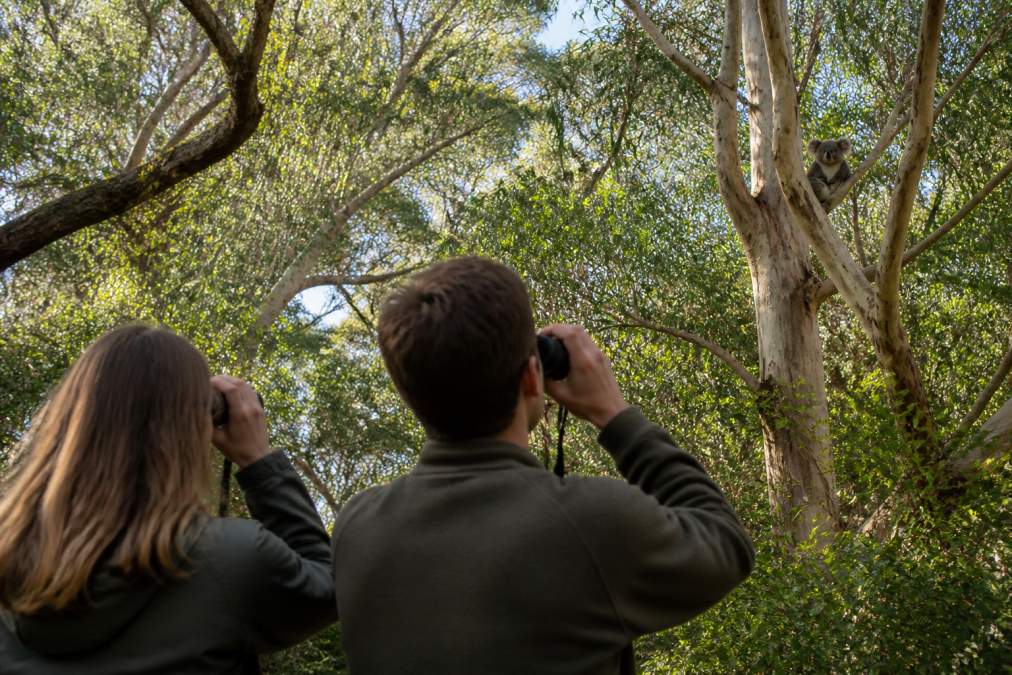
- Binoculars, ideally 8×42 or similar, for spotting animals high in the canopy.
- A camera with a zoom lens rather than a phone alone.
- Sturdy closed shoes for uneven forest tracks.
- A rain jacket, as Otways weather shifts quickly.
- Water and snacks, since facilities are limited away from townships.
- Insect repellent for warmer months.
- A torch with a red-light setting if you plan to look for glow worms after dark.
The single most useful item is a decent pair of binoculars. Most missed sightings happen because a koala was sitting quietly in plain view but too high to notice without magnification.
Accessibility and Planning Your Visit
Accessibility in the Otways is genuinely mixed, and the difference between a good day and a frustrating one usually comes down to matching the right site to your needs before you leave.
Accessible viewing options
Roadside pull-ins along the Cape Otway corridor are the most accessible way to see koalas: no walking, compacted gravel or sealed surfaces, and canopy scanning from beside your vehicle. For visitors using a wheelchair, a pram, or with limited mobility, they are the most reliable option, but not all are level, and some have soft shoulders that bog after rain.
What to check before you travel:
- Surface type, sealed, compacted gravel, boardwalk, or natural forest floor.
- Grade and width, whether the path is wide enough for a wheelchair or pram to pass another visitor.
- Facilities, accessible toilets are concentrated near townships and major visitor areas, not at remote trailheads.
- Weather sensitivity, unsealed surfaces in the Otways can be slippery for days after rain.
Seasonal behaviour and sighting odds
Koala activity shifts with the seasons, and understanding this changes where you should look and how long you should spend.
- Winter and early spring. Koalas often sit higher and more exposed, soaking up sun in the open canopy. Sightings are generally the most reliable of the year, and the animals are easier to spot against bare branches.
- Summer. Koalas retreat into denser foliage to stay cool, often wedging into shaded forks lower in the tree. You will need more patience and slower scanning, but the animals are sometimes closer to eye level than in winter.
- Autumn and spring transitions. Breeding activity increases movement between trees, which can produce more visible activity but also more scattered sightings.
Planning around weather and crowds
Otways weather changes quickly, so build in a wet-weather alternative, a shorter roadside route rather than a long ridge walk, and treat a rain jacket as standard kit, not an emergency item.
Frequently Asked Questions
What animals are in the Otways?
The Otways are home to koalas, kangaroos, wallabies, echidnas, and a variety of birdlife including king parrots and cockatoos. The region’s old-growth rainforests and coastal heathlands support high biodiversity. Glow worms are also found in some areas. Wildlife is most active at dawn and dusk, so plan your visit accordingly to maximise sightings.
Are koalas easy to find in the Cape Otway area?
Koalas are common in the Cape Otway area, particularly along the Great Ocean Road and in the Great Otway National Park. Look for them in eucalyptus trees, especially where you see droppings at the base or scratch marks on trunks. Early morning and late afternoon are the best times. They sleep up to 20 hours a day, so scan the canopy carefully for a grey ball of fur.
What should I do if I see a koala in the wild?
If you spot a koala, keep a respectful distance of at least 10 metres, stay quiet, and avoid blocking its path. Do not touch or feed it. Use binoculars or a zoom lens for photos. If the koala appears stressed or moves away, back off. Report any injured koalas to local wildlife authorities. Your responsible behaviour helps protect these native marsupials for future generations.
Do I need a tour to see koalas in the Otways?
No, you can see koalas independently by driving along the Great Ocean Road and stopping at known hotspots like Cape Otway. However, a guided tour can increase your chances by taking you to less obvious spots and providing expert knowledge. Many tours operate from Apollo Bay and Lavers Hill. If you prefer self-guided, pick up a map from the local visitor centre.
Spotting koalas in the wild rewards patience over speed, and the Otways offer some of the most dependable viewing in the region. After a morning on the trails, The Perch provides a welcome place to relax, with on-site kitchen gardens, custom menus built around local produce, and dog-friendly grounds for those travelling with a pet. Reserve your table at The Perch and round out your wildlife adventure with a meal surrounded by the same forest the koalas call home.