
Table of Contents
- Spring Harvest: September to November
- Summer Peak Season: December to February
- Autumn Abundance: March to May
- Winter Greens and Root Vegetables: June to August
- Exploring the Otway Harvest Trail Map
- Best Farm-to-Table Dining in the Otways
- Local Food Markets and Farmers Markets Schedule
- Storage and Preservation Tips for Fresh Harvest
- Frequently Asked Questions
Last Updated: September 3, 2026
Spring Harvest: September to November
Spring transforms the region into a burst of fresh colour and flavour. As temperatures warm and daylight extends, local growers bring berries, stone fruits, and tender vegetables to market. This is when seasonal produce in the Otways truly begins its annual cycle, with strawberries, asparagus, and spring onions leading the way.
Strawberries are the season’s star. Picked at peak ripeness, they offer a sweetness that rivals anything imported. Local farms also harvest fresh peas, broad beans, and young leafy greens, perfect for farm-to-table dining experiences where chefs can showcase the produce’s natural flavour without heavy manipulation. The region’s cool-climate advantage means longer growing seasons for berries, which develop deeper flavour profiles than warmer-climate counterparts.
Spring also marks the arrival of artisanal pantry items as producers bottle jams, preserve early-season berries, and craft syrups. At The Perch, the on-site kitchen gardens begin producing fresh herbs, mint, parsley, and chives, that elevate simple dishes into memorable meals.
Visit farmers markets early in the morning when selection is widest and produce is still cool from overnight storage. Spring harvests move quickly; what’s abundant one week may be gone the next.
Summer Peak Season: December to February
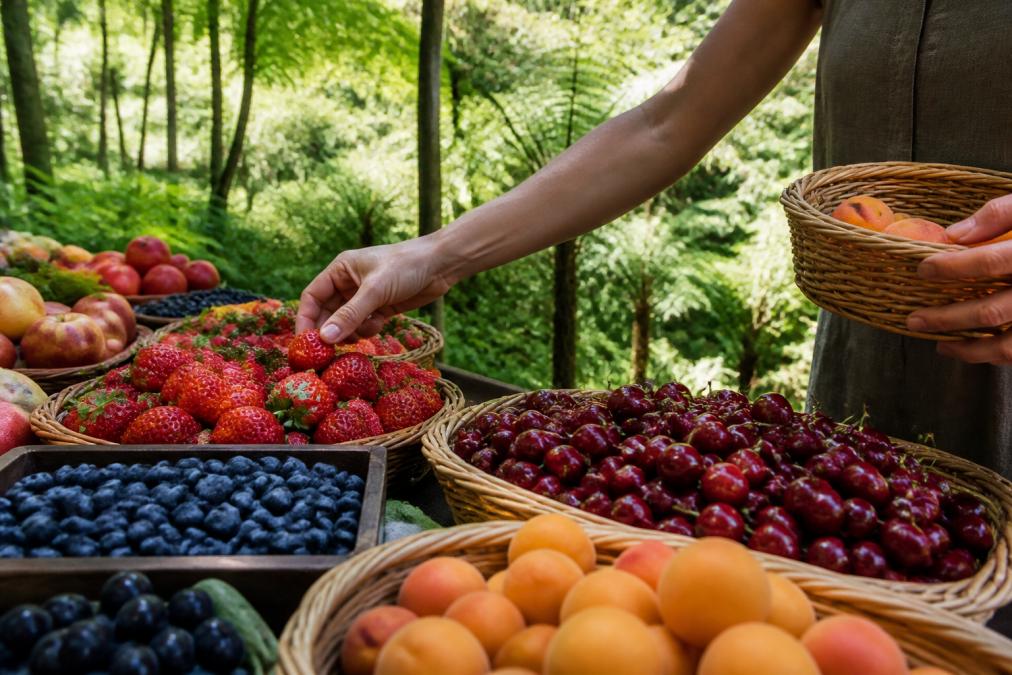
Summer is the season of abundance. Stone fruits dominate, peaches, nectarines, plums, and apricots reach their sweetest point. Berries continue in volume, and vegetables like zucchini, capsicum, and tomatoes flood local markets. This is peak season for seasonal produce in the Otways, when farm-gate stalls overflow and farm-to-table restaurants operate at full capacity.
The warm months also bring less common produce: finger limes, Davidson plums, and native pepperberries from foraged ingredients that thrive in the region’s rainforest environment. These native varieties represent the culinary adventure that distinguishes the Otways from other agricultural regions. Modern Australian cuisine embraces these ingredients, transforming them from curiosities into menu centrepieces.
Summer is also when preservation becomes practical. Fresh tomatoes are bottled, berries are frozen or jammed, and the season’s abundance is captured for winter use. Many visitors time their trips to coincide with this peak, seeking authentic farm-to-plate experiences where the day’s harvest becomes that night’s meal.
Summer produce is at its nutritional peak and flavour peak simultaneously. The speed from harvest to plate, often just hours, is what makes farm-to-table dining compelling during these months.
Autumn Abundance: March to May
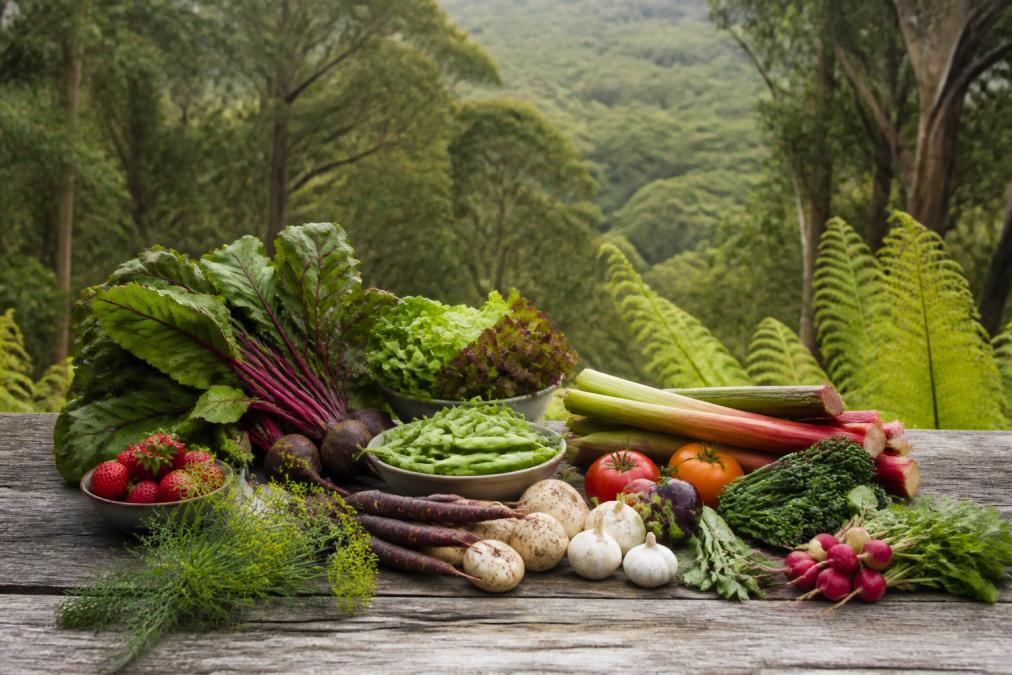
Autumn shifts the focus to heartier fare. Apples, pears, and quinces dominate orchards. Root vegetables, beetroot, carrots, parsnips, begin their emergence. Leafy greens like silverbeet and kale thrive in cooling temperatures. This season showcases seasonal produce in the Otways at its most versatile, offering both the tail end of summer crops and the beginning of winter staples.
The Otway Harvest Trail Map becomes particularly useful during autumn, as different farms reach peak production at different times. Early autumn (March) still captures late stone fruits and berries. Mid-autumn (April) brings the apple and pear rush. Late autumn (May) emphasises root crops and brassicas. Understanding this progression helps visitors plan visits to align with specific produce they want to experience.
Autumn is also when mushroom foraging peaks. The region’s damp forest floor produces native and cultivated varieties that appear in restaurant kitchens and farmers markets. This is also peak season for artisanal producers, ciders, preserves, and pickled vegetables reflect the season’s abundance.
Winter Greens and Root Vegetables: June to August
Winter might seem like a quiet season, but the Otways produce some of their most nutrient-dense crops during these months. Brassicas, broccoli, cauliflower, cabbage, thrive in cool weather. Root vegetables reach full maturity. Leafy greens like spinach, lettuce, and Asian greens are at their sweetest, as plants concentrate sugars to survive cold temperatures.
This is when storage and preservation tips become essential knowledge. Root vegetables keep for weeks in cool conditions. Greens are best consumed within days. Understanding how to store fresh harvest properly extends the season’s value and reduces waste. Many home cooks and chefs rely on winter produce that’s been preserved from autumn, bottled tomatoes, frozen berries, and pickled vegetables bridge the gap between seasons.
Winter also highlights the region’s cool-climate advantage. Produce grown in cold months develops more complex flavours than fast-grown warm-season equivalents. This is why winter greens from the Otways command premium prices at markets, they’re denser, sweeter, and more flavourful than imported alternatives.
Exploring the Otway Harvest Trail Map
The Otway Harvest Trail Map is your guide to understanding where produce comes from and when it’s available. Rather than a single touring route, it’s a collection of farms, orchards, and producers spread across the region. Some operate farm-gate stalls with direct sales. Others supply restaurants and markets exclusively.
Understanding the map’s geography is essential for logistics and timing. Farms in the eastern Otways near Lorne face different microclimates than those inland near Lavers Hill. Elevation, rainfall, and wind exposure all influence what grows where and when. A farm 300 metres higher might harvest three weeks later than a coastal operation just 20 kilometres away. This means strawberries may peak in coastal areas by late September, whilst inland growers are still harvesting in mid-October. Similarly, autumn apples in elevated regions (around 400-500 metres) develop better colour and sugar concentration than lower-altitude orchards, making them worth the drive for serious produce seekers.
The eastern corridor (Lorne to Anglesea) experiences milder winters and earlier spring growth, making it ideal for early-season berries and stone fruits. Central farms (Beech Forest, Forrest) occupy the cooler plateau, producing exceptional cool-climate vegetables and late-season apples. Western properties (Lavers Hill, Colac Otway) benefit from higher rainfall, supporting mushroom foraging and lush brassica production through winter.
Many farms on the trail offer pick-your-own experiences during peak seasons. This transforms produce shopping into a culinary adventure, you select fruit directly from the plant, understanding freshness in a way supermarket shopping never provides. It’s also where visitors connect with growers, learning about crop rotation, sustainable agriculture practices, and the realities of regional food production. Most pick-your-own operations run December through April (berries and stone fruits) and March through May (autumn fruit). Arrive mid-morning to mid-afternoon; early morning crowds can be heavy, and late afternoon often means picked-over selections.
Parking and accessibility vary significantly. Coastal farms typically have sealed car parks and toilet facilities; inland operations may offer gravel parking only. Many farms are not wheelchair accessible beyond the farm-gate stall area. Check ahead if mobility is a consideration. Most farms request you bring your own containers for pick-your-own; those without containers can usually purchase or borrow baskets for a small deposit.
Peak seasons mean peak crowds at popular farm-gate locations. Arrive early or visit mid-week to avoid queues and ensure wider selection. Many farms close during winter or operate limited hours. Phone ahead to confirm opening times and current harvest availability; what’s in season changes weekly.
Best Farm-to-Table Dining in the Otways
Farm-to-table dining in the region represents a genuine commitment to seasonal produce in the Otways, not merely a marketing concept. The best restaurants source from specific farms they’ve partnered with, often featuring seasonal menus that change every few weeks as harvests shift.
The Perch exemplifies this approach. Founded by hospitality veterans Dean and Gabrielle, the restaurant sources from its own on-site kitchen gardens, supplemented by carefully selected local growers. The menu reflects what’s currently at peak ripeness, ensuring every dish showcases produce at its flavour peak. Dining here isn’t just about eating well, it’s about understanding the region’s agricultural calendar through your plate.
These restaurants typically feature custom menus for events, allowing couples planning weddings or corporate groups organising retreats to build menus around seasonal availability. This approach guarantees freshness whilst reducing food miles and supporting local producers.
Local Food Markets and Farmers Markets Schedule
Farmers markets operate year-round across the region, though frequency and vendor count vary by season. During peak seasons (December through May), markets run weekly with 30-50 vendors. Winter markets operate fortnightly with 10-20 vendors, focusing on root crops, preserved items, and greenhouse produce.
Monthly Market Patterns:
September-November (Spring): Markets increase from fortnightly to weekly as spring progresses. Early September sees 15-20 vendors; by November, most markets reach 35-45 vendors. Strawberries, asparagus, and spring onions dominate stalls. Markets typically run Saturday mornings, 8 am to 1 pm.
December-February (Summer Peak): Weekly markets with 40-50 vendors are standard. Multiple markets operate simultaneously across different towns, allowing visitors to choose based on location. Stone fruits, berries, and native produce flood stalls. Markets often extend to Sunday mornings during January school holidays. Arrive by 9 am; popular items (finger limes, Davidson plums, premium berries) sell out by 11 am.
March-May (Autumn): Markets remain weekly through March and April, dropping to fortnightly by late May. Vendor count holds at 30-40 through April, declining to 15-25 by May. Apples, pears, mushrooms, and preserved items dominate. This is when artisanal producers (cider makers, pickle specialists) have the widest selection.
June-August (Winter): Fortnightly markets with 10-20 vendors. Root vegetables, brassicas, and preserved goods from autumn dominate. Many summer-focused vendors disappear; those remaining specialise in storage crops and value-added products. Markets often shift to Saturday mornings only, with some venues closing entirely.
Specific Market Locations and Timing:
Most towns host markets on Saturday mornings year-round. Coastal towns (Lorne, Anglesea) run larger markets with more vendors and longer hours (typically 8 am to 2 pm). Inland towns (Forrest, Beech Forest) host smaller, more intimate markets (8 am to 12 pm) with strong local producer presence. Some towns add Sunday markets during peak season (December-February).
Beyond traditional farmers markets, farm-gate stalls dot the region. These direct-from-grower operations often offer better prices than markets (no middleman markup) and fresher produce (picked that morning). Many operate honesty-box systems during off-hours, allowing flexible access to seasonal produce. Farm-gate stalls typically operate 9 am to 5 pm during peak season; winter hours are often 10 am to 3 pm or weekends only.
Visitor Logistics:
The best markets operate early morning, typically 8 am to 1 pm. This timing ensures produce is cool from overnight storage and selection is widest. Vendors often sell out of popular items by late morning during peak season, particularly berries and premium produce. Bring reusable bags or boxes; most markets discourage single-use plastic, and some vendors offer modest discounts for customers with their own containers.
Parking at farmers markets varies. Coastal venues often have dedicated car parks; inland markets may use town-centre parking or overflow areas. During peak season (January-February), arrive 15 minutes early to secure parking. Many markets accept card payments, but some smaller vendors operate cash-only; withdraw cash beforehand or use the ATM facilities most markets provide.
Visit the same market multiple times across the season to build relationships with vendors. Regular customers often receive advance notice of rare items, first pick of premium produce, and insider knowledge about what’s coming next week.
Storage and Preservation Tips for Fresh Harvest
Understanding how to store fresh harvest properly extends its life and maintains nutritional value. Different produce requires different approaches. Berries keep for 3-5 days in the coldest part of your refrigerator. Stone fruits continue ripening after picking; store at room temperature until ripe, then refrigerate for 5-7 days. Root vegetables keep for weeks in cool, dark conditions; a pantry or cool cupboard works better than a warm kitchen bench.
Preservation techniques capture the season’s abundance for winter use. Freezing is simplest for berries and stone fruits; they freeze well and thaw into usable texture for cooking (though not for fresh eating). Bottling tomatoes, berries, and stone fruits in syrup creates shelf-stable preserves. Pickling root vegetables and greens extends storage life to months. Drying herbs and mushrooms concentrates flavour whilst enabling year-round use.
Many local producers sell preservation supplies and equipment. Farmers markets often include stalls selling bottles, pickling spices, and other preserving essentials. Some farms offer workshops on preservation techniques, teaching visitors how to capture the season themselves.
Frequently Asked Questions
When is berry season in the Otways?
Berry season peaks from December through February, with some varieties extending into early autumn. Strawberries, raspberries, and blackberries thrive during the warmer months. Many pick-your-own farms and local markets stock berries from September onwards as spring plantings mature. Check with individual growers on the Otway Harvest Trail map for specific harvest windows, as timing varies by farm and elevation within the region.
What are the best farm-gate produce options along the Otway Harvest Trail?
The Otway Harvest Trail connects growers offering artisanal pantry items, organic vegetables, and fresh fruit direct from the source. Spring brings asparagus and leafy greens; summer offers berries and stone fruits; autumn yields apples and root vegetables; winter provides brassicas and stored produce. Many farms offer pick-your-own experiences and farm-gate stalls with minimal food miles, allowing you to select seasonal produce at peak freshness while supporting local growers directly.
How does the local climate influence seasonal produce availability in the Otways?
The Otways’ cool climate and high rainfall create ideal conditions for cool-season crops like berries, stone fruits, and brassicas. The region’s elevation and maritime influence extend growing seasons and produce superior flavour profiles compared to warmer areas. Autumn arrives earlier here, making March-May ideal for apple harvest and root vegetables. This climate also supports sustainable agriculture practices with natural pest management, reducing the need for chemical interventions on local produce.
What storage methods work best for preserving fresh seasonal produce?
Cool-season vegetables like leafy greens and brassicas store best in the crisper drawer at 2-4°C for up to two weeks. Berries last 3-5 days refrigerated; freeze excess for later use. Root vegetables keep in a cool, dark place for weeks. Stone fruits ripen at room temperature, then refrigerate. Herbs stay fresh in water like cut flowers. For longer preservation, consider preserving techniques like pickling or jam-making with autumn apples and berries, traditional methods that extend the harvest season year-round.
Visiting the Otways during peak seasons offers an unparalleled opportunity to connect with regional food production. Whether you’re planning a wedding celebration, a corporate retreat, or simply seeking an authentic culinary adventure, The Perch delivers an unforgettable experience grounded in the region’s seasonal bounty. Reserve now to experience farm-to-plate dining that showcases the Otways’ finest produce, surrounded by old-growth rainforest and native wildlife.
This article was written using GrandRanker